
Why 3D renderings
are reshaping real estate
August 1, 2025
In today’s highly competitive real estate market, visuals have shifted from “nice to have” to absolutely essential. Traditional formats are no longer enough—2D floor plans make sense only to industry insiders, physical models are outdated, and photos of construction sites rarely inspire confidence.
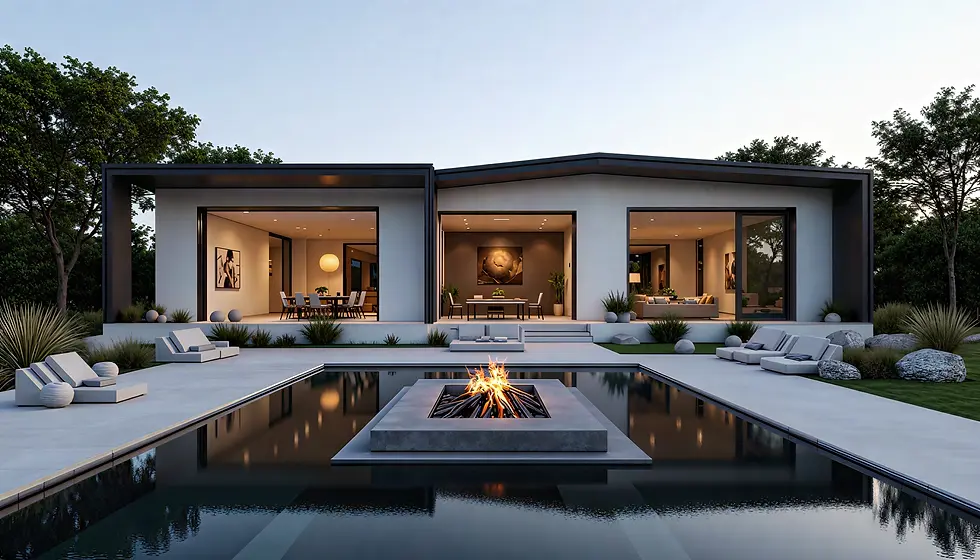
Photorealistic 3D renderings are now the new standard. These visuals allow future buyers or investors to step into a project before a single brick is laid. No longer just a presentation tool, 3D rendering has become a real sales asset. In 2025, it is no longer optional, it’s a core part of the marketing stack.
Le rendu 3D photoréaliste s’impose désormais comme la norme dans la communication immobilière. Il offre une capacité unique à projeter un projet architectural avant sa réalisation, à créer de l’émotion, à convaincre rapidement. Plus qu’un outil de visualisation, le rendu 3D devient un outil de vente. Et en 2025, il s’impose comme un incontournable.

Why traditional tools are no longer enough
For years, real estate professionals relied on 2D plans and physical models to pitch their projects. While technically accurate, these formats lack immersion and emotional connection. They require interpretation, which can be a barrier for non-experts.
Most clients struggle to visualize space from lines and dimensions. Even the most detailed plan can feel abstract. As for architectural models, they’re expensive, difficult to update, and hard to scale. These limitations slow down the decision-making process, create confusion, and reduce the impact of a sales pitch.

How 3D renderings transform real estate storytelling
3D renderings have changed the game by offering a clear, emotional, and realistic way to present architectural projects. They eliminate guesswork by allowing anyone to understand spatial organization, natural light, materiality, and atmosphere at a glance.
A well-crafted rendering tells a visual story. It communicates intent and design quality without needing a single word. The rendering becomes a preview of life inside the space, not just a depiction of walls and windows, but of ambiance, rhythm, and purpose. This immersive clarity significantly boosts interest and helps decision-makers move forward with confidence.

Measurable impact on sales and engagement
Numbers tell the story just as well as visuals do. Listings that include 3D images see up to 90% more engagement than those that rely on traditional photography. Projects presented with strong 3D visuals are remembered longer, shared more often, and perceived as more premium.
In pre-sale phases, 3D renderings are particularly powerful. They make it possible to sell off-plan properties with greater ease. Buyers can explore the future space in its best light, which removes doubt and speeds up the purchase cycle. Visual consistency across marketing channels also reinforces trust and brand identity.
A strategic tool for real estate marketing
3D rendering isn’t just a design feature, it’s a marketing engine. It integrates seamlessly into digital campaigns, websites, printed brochures, social media, and sales presentations.
Whether launching a new residential development, renovating a historic property, or pitching an investor, 3D visuals elevate the entire experience. They enable real estate professionals to create stronger first impressions and position their offers as more polished and desirable. Over time, this leads to higher conversion rates and faster sales cycles.

What makes a real estate rendering truly effective
High-quality renderings depend on much more than software. They require thoughtful art direction. Light must be used strategically to shape perception and reveal depth. Materials need to be textured, realistic, and consistent with the architectural vision.
Framing and composition are just as important. Every image should guide the viewer's eye naturally and showcase the space’s best features. The presence of subtle everyday objects, furniture, decor, greenery, adds a layer of authenticity that helps bring the scene to life. When everything aligns, the image becomes not just informative, but emotionally compelling.

Common mistakes to avoid
Even in 2025, some renderings still fall flat. Often, the problem lies in details that were rushed or overworked: textures that feel fake, lighting that’s too harsh or artificial, generic furniture, or scenes that feel too polished to be believable.
Over-editing is a common pitfall. When an image feels overly synthetic, it loses its human appeal. The best renderings find the sweet spot between realism and artistic intent. Their goal isn’t to impress with complexity, but to inspire confidence in the project’s vision.

3D renderings have redefined how real estate is sold. They bring together design, storytelling, and emotion in a single frame. In doing so, they shorten sales cycles, increase trust, and elevate the entire buyer experience.
In 2025, these visuals are more than a tool, they’re a business asset. For developers, architects, agencies, and interior designers, investing in 3D is no longer a trend. It’s a smart, strategic move that aligns with how people buy and connect with space today.
At Lumia, each rendering is designed not just to be beautiful, but to convert, to convince, and to make an idea feel real.


