
Architecture & competitions: the decisive power of 3D rendering
September 11, 2025
In the competitive world of architectural competitions and large-scale urban projects, 3D rendering is no longer just an aesthetic tool, it’s a strategic weapon. Where plans, sections, and technical documents often fail to spark emotion, 3D imagery tells a story, projects a vision, and triggers buy-in. Juries, investors, local authorities, and the public now judge a proposal as much for its conceptual strength as for its ability to be desirable and memorable.
But why has 3D rendering become so decisive? And how are leading architects and studios using it to transform their submissions into powerful visual experiences that convince far beyond the technical files?
Let’s explore why, today, a rendering can be the difference between a concept that stays on paper and a project that comes to life.

Convincing a jury
An architectural jury often has to evaluate dozens of proposals in a short time. Technical files tend to look alike: scaled plans, detailed sections, lists of materials. What tips the balance is a project’s ability to be instantly understandable and memorable.
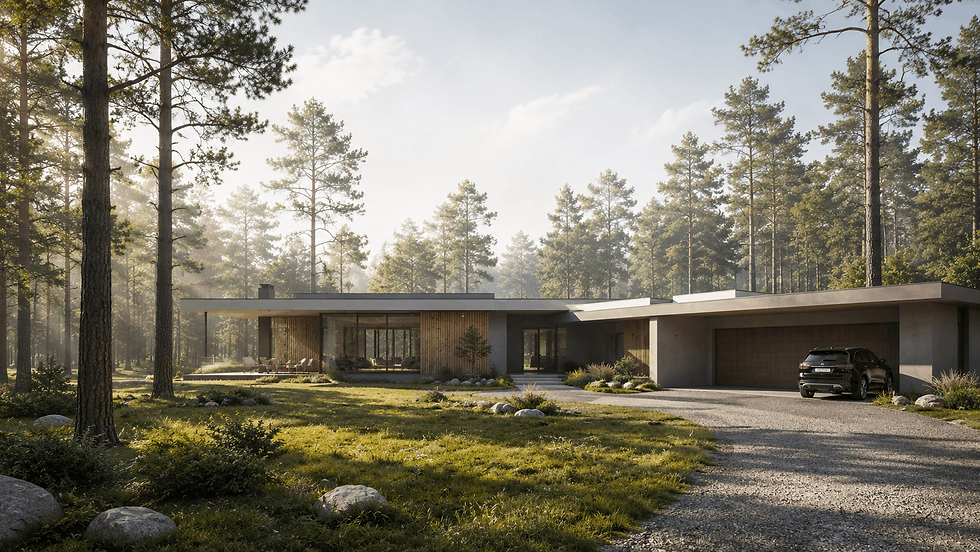
3D rendering bridges the gap between technical language and universal visual language. A well-composed perspective can make a jury feel the daylight pouring into a future atrium or the ambiance of a public square on a summer evening. This emotional dimension makes evaluation less abstract and encourages identification with the project.
As Jean Nouvel once said: “Architecture is a promise.” The rendering becomes the carrier of that promise. It’s no longer just about showing a building but embodying a vision of a city, a lifestyle, an experience. In a competition, this emotional resonance can be the decisive “coup de cœur.”

Project examples
Several iconic projects illustrate how crucial rendering can be to competition success:
- Guggenheim Helsinki (unbuilt, BIG, 2014): Bjarke Ingels Group’s proposal stood out thanks to immersive renderings that showed not only the architecture but its dialogue with the sea and Nordic light. These visuals carried the project through to the final stages of selection.
- Elbphilharmonie (Hamburg, Herzog & de Meuron): The spectacular renderings of this landmark, highlighting light, transparency, and reflections, helped convince decision-makers of its transformative impact on the city’s skyline.
- Zaha Hadid Architects: From Beijing to Dubai, their fluid, futuristic renderings have given their projects a distinctive visual identity that resonates beyond technical complexity.
These examples show that renderings don’t just “illustrate” a concept. They carry it, amplify it, and inscribe it in collective imagination.

The emotional power
Beyond technique, a well-crafted 3D rendering plays on emotion. Architecture is not just about square meters, lines, and materials, it’s about life experience.
Light, perspective, human scale, textures: all of these elements work together to create an atmosphere. A jury that connects with the mood of a project is far more likely to remember it.
Take, for example, competitions for public facilities such as libraries or museums. What often convinces decision-makers isn’t just the structure itself, but the way people can see themselves within the space. A rendering that shows a visitor sitting in an atrium bathed in natural light, or a child captivated by a glass façade, tells a story that words alone could never convey.
It’s this emotional dimension that transforms an architectural project into a shared vision.

Business impact
A plan can demonstrate a project’s logic. An image can reveal its soul.
3D visualization allows architects to craft atmospheres by playing with three key levers:
- Light: whether natural or artificial, it reveals spatial intent and generates emotional response (diffuse light conveys calm, dramatic night lighting suggests dynamism).
- Perspective: a viewpoint can communicate monumentality, intimacy, or openness.
- Narrative: the inclusion of people, vegetation, or seasonal atmospheres (rain, snow, summer heat) projects the viewer into a lived experience.
In recent competitions, there’s a clear move toward hyperrealism, showing not a flawless building, but a believable one: lived-in, animated, alive. Far from the overly polished visuals of the 2000s, today’s renderings borrow from cinema, adopting a narrative approach.
This storytelling dimension forges a powerful emotional bond. The jury no longer just sees a project; they imagine it built, used, inhabited.

Standing out in the crowd
Every competition attracts dozens, sometimes hundreds, of submissions. Many proposals meet the brief technically: compliance, innovation, urban integration. What truly distinguishes a project is its ability to be identified and remembered.
3D rendering becomes a visual signature. Through unique atmosphere, inspired composition, or a detail that resonates, it anchors a project in the jury’s mind. Some studios even cultivate a recognizable rendering style, almost like a brand identity.
This differentiation isn’t just aesthetic. It reflects a strategic stance: showing that the project doesn’t just meet requirements, but embodies a distinctive vision. In ultra-competitive contexts, this ability to stand out can be decisive.

What’s next?
3D visualization keeps evolving, reshaping the rules of competitions:
- Virtual Reality (VR): allowing juries to “walk through” a building before it’s built. Some competitions already integrate VR headsets in their presentations.
- Augmented Reality (AR): superimposing a project on its real environment via a tablet or smartphone, giving instant understanding of urban integration.
- Digital Twins: beyond static visuals, these 3D models integrate real-time data (traffic, climate, energy) to demonstrate performance interactively.
These tools push rendering beyond representation into the realm of experience. Viewers are no longer passive observers but active participants in discovery.

In architecture competitions and urban projects, 3D rendering has become a decisive asset. Not because it beautifies reality, but because it transforms a vision into emotion, a promise into an experience.
Projects that win approval aren’t always the most technically daring, but often those that are understood, desired, and vividly imagined.
3D rendering is, in this sense, more than a visual tool. It is a bridge between the architect’s language and the perception of those who will decide the project’s future. In a world where decisions hinge on both reason and emotion, it has become the universal language of conviction.



A project in mind?
Brief us!
Let’s start the conversation.
Tell us about your project and let’s bring it to life.