
How much does an architectural rendering cost in 2026?
April 9, 2026
The cost of an architectural rendering can vary dramatically. Some visuals are produced for a few hundred dollars, while others require several thousand dollars per image. For many clients, these price differences seem difficult to understand. In reality, they reflect major differences in quality, complexity, and strategic intent.
Today, 3D rendering plays a central role in real estate marketing. Before a project is even built, visuals already influence perception, trust, and the ability to convince investors or future buyers.
Understanding what truly impacts the cost of a rendering helps companies evaluate offers more accurately, avoid common mistakes, and invest in visuals that genuinely support the goals of the project.

What you are actually paying for
When commissioning an architectural rendering, clients are not simply paying for a final image. They are paying for a process that combines technical expertise, visual direction, and strategic thinking.
A professional rendering typically includes:
- 3D modeling,
- material creation,
- lighting development,
- composition,
- vegetation integration,
- furniture staging,
- atmosphere building,
- post-production,
- and often a broader reflection on how the project should be perceived.
Production time depends heavily on the level of realism and refinement required. A rendering created for an architectural competition will not follow the same logic as a visual designed for luxury real estate marketing or pre-construction sales.
The strongest renderings do more than show a building. They create emotional projection.

How much does an architectural rendering actually cost?
While every project is unique, certain pricing ranges are commonly seen across the architectural visualization industry.
For a relatively simple residential exterior image, pricing often starts between 500 and 1000 CAD. These projects usually involve smaller environments, simpler architecture, and moderate levels of detail.
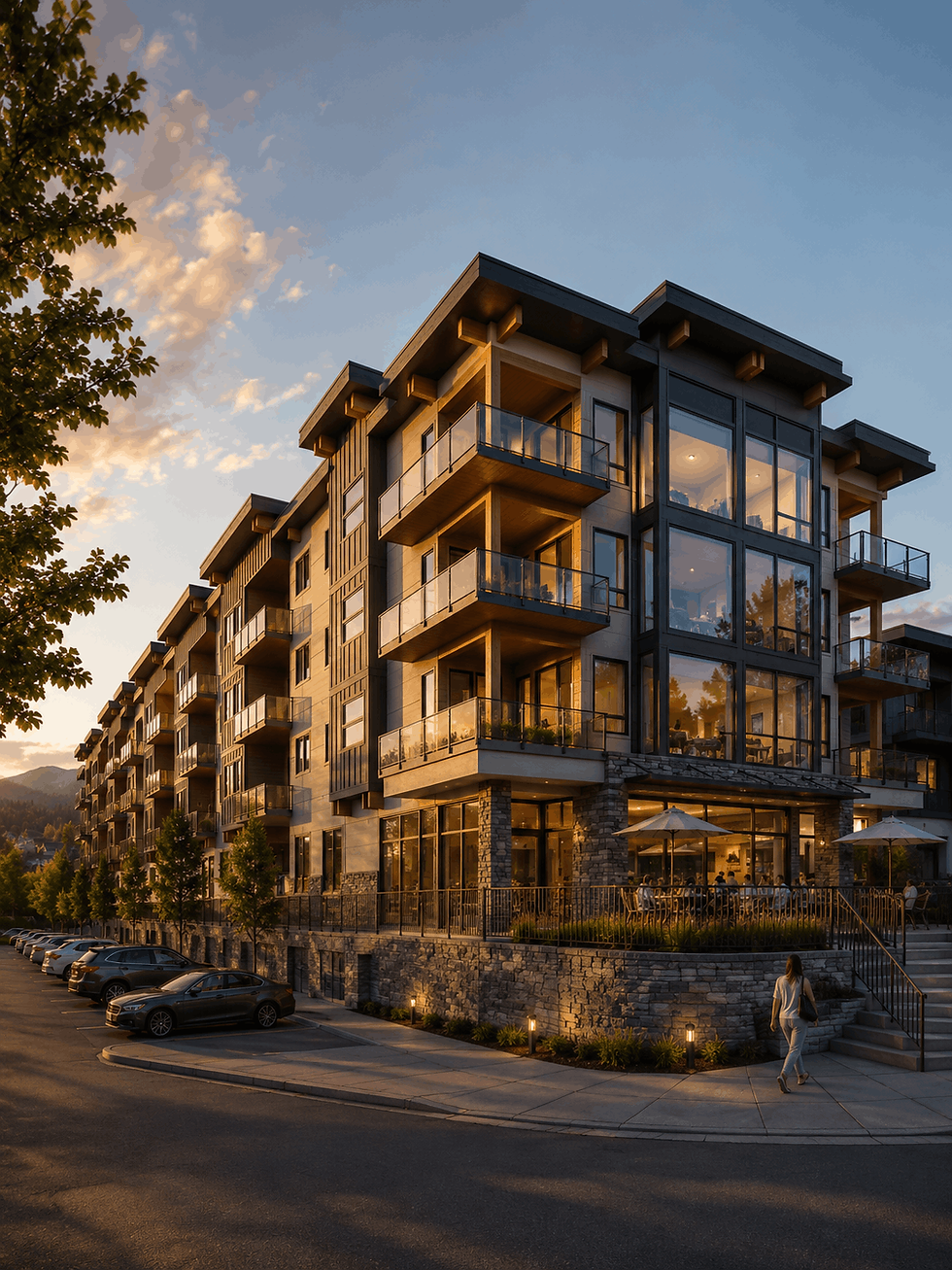
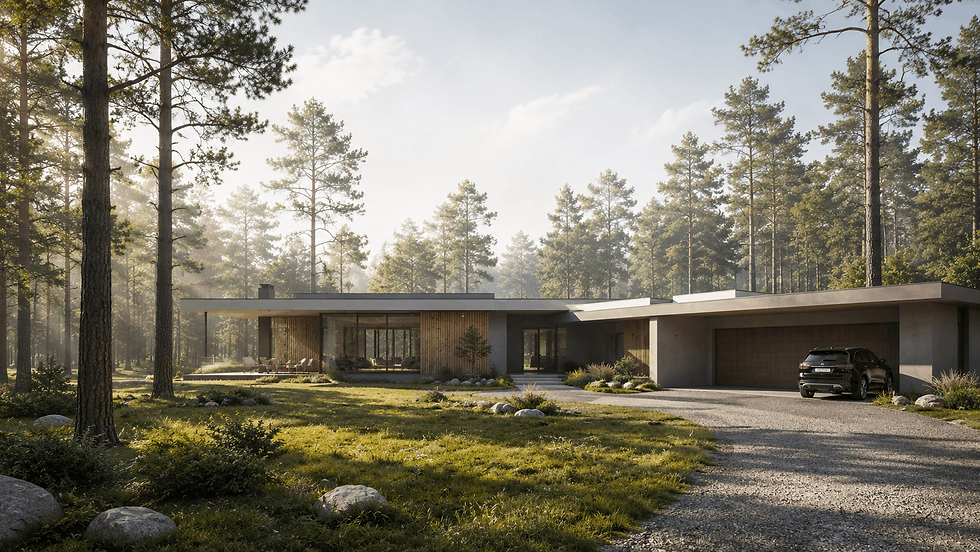
High-end photorealistic renderings designed for premium real estate marketing more commonly range between 1,500 and 4,000 CAD per image. At this level, the work focuses not only on technical execution but also on atmosphere and visual storytelling:
- realistic natural lighting,
- detailed landscaping,
- believable materials,
- cinematic composition,
- cohesive art direction.
Interior renderings often require even more production time due to furniture, decoration, lighting complexity, and fine material detailing.
Architectural animations represent a significantly larger investment. A cinematic real estate animation can range from 5,000 to 30,000 CAD, depending on:
- duration,
- realism,
- camera movement,
- storytelling,
- visual effects,
- and sound design requirements.
Immersive and interactive experiences, such as real-time walkthroughs or virtual tours, can exceed these numbers substantially for larger developments.

Why some renderings cost significantly more
Two visuals may represent the exact same building while requiring completely different levels of production.
The difference often comes down to:
- detail density,
- lighting quality,
- realism of materials,
- environmental complexity,
- post-production,
- and especially art direction.
Premium studios invest substantial time refining how an image feels emotionally, not only how it looks technically. The objective is not simply to display architecture, but to create atmosphere and desire.
According to the National Association of Realtors, high-quality visual content significantly increases engagement with real estate listings.
In this context, rendering becomes a sales tool, not just a visual asset.

The limitations of low-cost renderings
The growth of freelance marketplaces and outsourcing has made very inexpensive renderings widely available.
However, low-cost production often leads to:
- inconsistent visual quality,
- unrealistic materials,
- weak lighting,
- poor composition,
- lack of artistic direction,
- unstable delivery timelines,
- and communication challenges.
In real estate, presentation quality directly impacts project perception. A premium development presented with average visuals immediately loses part of its perceived value.
When millions of dollars are invested into a property development, visuals become a critical part of the marketing strategy.

Still image, animation, or immersive experience?
Different formats involve very different levels of production.
Still images remain the most accessible and widely used format. In many cases, a single well-crafted rendering can communicate the essence of a project effectively.
Animations require a much heavier workflow:
- camera choreography,
- rendering hundreds or thousands of frames,
- editing,
- transitions,
- color grading,
- and sometimes sound design.
Immersive and interactive experiences add another layer of technical complexity. Real-time environments must remain visually convincing while being optimized for smooth navigation.
These tools are becoming increasingly valuable for developers seeking to create more engaging pre-construction experiences.
How to choose a studio beyond price alone
Comparing studios based only on price is rarely the best approach.
A strong visualization studio should be evaluated based on:
- portfolio quality,
- visual consistency,
- architectural understanding,
- artistic direction,
- communication,
- reliability,
- and understanding of the project’s commercial objectives.
An architectural rendering should do more than show a space. It should reinforce perceived value and support decision-making.
At Lumia, each visualization is approached as a strategic communication tool designed to elevate how a project is perceived before it is built.

The cost of an architectural rendering reflects far more than time spent inside software. It represents the level of precision, artistic direction, and strategic thinking required to transform architecture into a compelling visual experience.
Choosing a rendering based only on price often means underestimating the role visuals play in real estate perception and marketing performance.
Today, visuals directly influence trust, emotional projection, and the ability to sell a project before construction even begins.
Architectural rendering is approached as a strategic investment capable of strengthening credibility, accelerating marketing, and increasing perceived value over the long term.



A project in mind?
Brief us!
Let’s start the conversation.
Tell us about your project and let’s bring it to life.